Amla Oil Hair Growth: Everything You Need To Know
If you haven’t heard of amla oil for hair growth before, I’ll give you the low down.
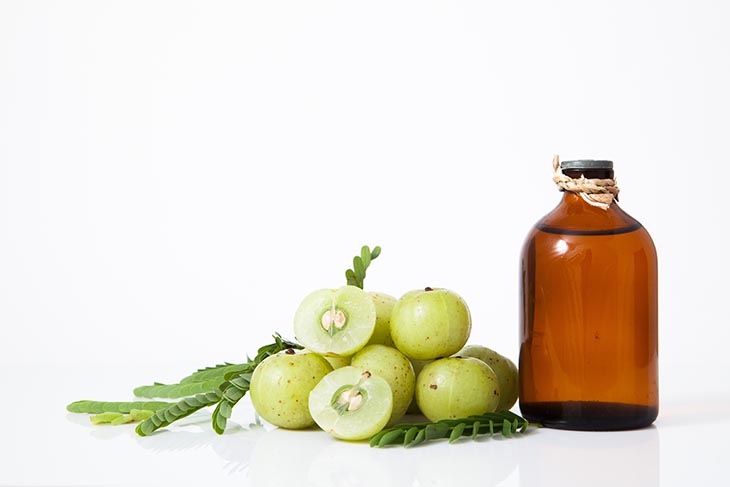
It comes from the Indian gooseberry tree, also known as the amalaki tree. The fruit is picked and dried, and then immersed in some type of carrier oil. It’s typically sesame or coconut.
Once the fruits have been steeped for a few days, they’re removed. Then the oil is purified. You’re left with, you guessed it, amla oil.
The oil can be applied to the skin as a natural moisturizer.
Amla fruit is a staple of traditional Ayurvedic practice, but research on amla oil for hair is limited.
The oil has a variety of uses, but it's most famous for hair care.
Keep expectations realistic: there is little clinical evidence that amla oil regrows hair.
The Method
There are a few ways to use amla oil to condition your hair and scalp.
You can add a few drops to your favorite shampoo. Many people use it hoping to boost hair growth, but its proven benefit is shinier, softer hair.
You can warm it between your palms and massage it into your scalp and along hair strands to give it shine.
Leave the oil on for about 15 minutes before rinsing well. Avoid getting any in your eyes.
Another method involves massaging the oil into your scalp and along hair and then putting on a shower cap. Leave it overnight and rinse it out in the morning.
Be sure to protect your bedding as the oil can stain material.
Specifically
So now you know what amla oil is, and the benefits it can provide for your hair.
But which is the best amla oil for hair growth?
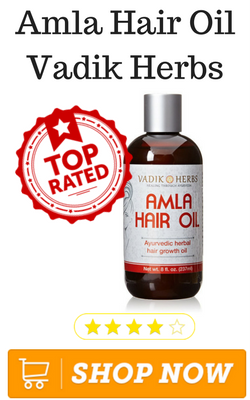
Ladies and gents, I give you Amla Hair Oil by Vadik Herbs!
This 8oz bottle (tinted to protect the quality of the oil from sunlight) can be used by women and men alike for both facial hair and the hair on your head.
Vadik Herbs’ variety of amla oil is great applied as is, or mixed with another carrier oil (coconut oil smells wonderful). It won’t leave a greasy film when you rinse it out.
Users say it leaves hair feeling softer. Do a patch test first, especially on color-treated hair.
Pros And Cons
The most obvious pro is that it can make hair feel softer and look shinier.
No study shows it grows thicker hair faster than other oils, so treat it as a conditioner, not a hair loss treatment.
Natural oils can still irritate skin, so do a patch test before regular use.
Because it can be used by both men and women, you won't need to buy separate products for you and your spouse. Ask your pediatrician before using it on a child's scalp.
One potential con of amla oil, in general, is that it can have a musky smell depending on how pure it is.
It’s best used at home when you don’t have any plans, or mixed with a shampoo or conditioner to mask the smell.
If it irritates or dries out your skin, stop using it. Use it sparingly at first to see how your skin reacts.
In Summary
If you want to make beauty improvements and want to do it in as natural a way as possible, amla oil should be on your list.
Vadik Herbs amla oil is our pick if you want to try it.
If your hair is thinning, see a doctor or dermatologist. Proven treatments such as minoxidil exist, and thinning can signal a health issue like thyroid disease or anemia.
A warm-oil scalp massage feels good, though evidence that it can promote hair regrowth is limited.
For men, it can also soften beards and add shine.
For women, it’s wonderful for brows and eyelashes as well.
Put this on your shopping list and experience the benefits of amla oil.
Sources
- Hair loss, MedlinePlus
- Hair Cosmetics: An Overview, International Journal of Trichology (PMC)