Buying The Best Back Brace For Lifting: Your Guide
Contents
If you’re a weight lifter or do a lot of heavy lifting with your job I would never underestimate how helpful a brace for your back could be.
A lifting belt can help you brace your core on heavy lifts. Don't count on it to prevent injury, though: NIOSH found too little evidence that back belts prevent injuries and does not recommend them for workers who have never been injured.
Rows, bench presses, dead lifts and curls are amongst the exercises that can most cause back sprains and strains.
My top choice for the best back brace for lifting would be the Schiek Lever Competition Power Lifting Belt. It's a sturdy, well-made belt.
Why Use A Back Brace For Lifting?
Most people don’t understand how or why you would use a weight belt for your back when doing heavy lifting.
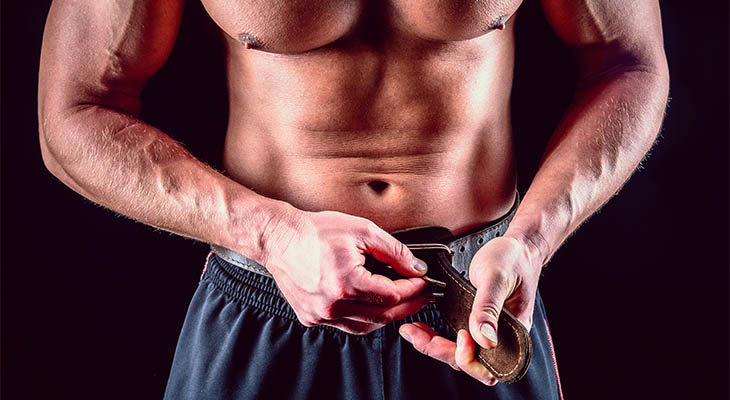
The main function of a back brace would be to help support the front of your body. It does this by putting pressure on your abdominal muscles.
Basically, it provides a stable hard surface for your ab muscles to push against. In turn, this really helps stabilize your spine from the inside.
As a result, your midsection becomes more rigid, giving you a more stable position to lift.
Belts are thought to raise pressure inside the abdomen, but NIOSH notes that claims of reduced forces on the spine have not been proven. A belt also doesn't replace your core muscles; you still need to brace and contract them.
Train without a belt on lighter sets too, so your core gets stronger on its own.
A belt won't fix poor form. Learn to lift the right way: bend at the knees, tighten your stomach muscles, keep the load close, and don't twist.
Used on heavy sets by a lifter with good technique, a belt can help you feel more stable. Be careful: NIOSH warns that people who think a belt lets them lift more may lift loads that hurt them.
Why Choose The Schiek Lever Competition Belt?
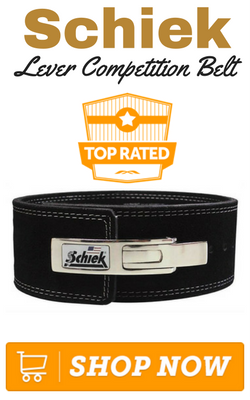
Schiek is a well-known American maker of lifting belts.
This is a leather lever belt. If you compete, check your federation's equipment rules before buying.
It has a heavy-duty lever closure system with the nice Schiek logo on the front.
Most lifting belts are about 4 inches wide, and powerlifting federations cap belt width, so check the rules if you compete.
I recommend it if you’re looking for a back brace for lifting.
Pros & Cons
The main downside of any lever belt is that changing the size takes a screwdriver, so it's less handy if your weight changes.
Leather is strong and sturdy, which is why many lifters prefer it.
Check the listing for width, thickness, and sizes before you order.
The locking lever really makes it simple and easy to put on. A well-made leather belt can last for years.
Some people might think that wearing a back brace might make your lower back look wimpy, but when you think about it, top bodybuilders wear them. Do they in any sense look like that have a weak back?
A belt won't strengthen your back on its own; training does that. The belt just helps you brace on your heaviest sets.
A lifting belt is a useful tool for heavy training, not a substitute for good technique. If you have back pain or a past back injury, check with a doctor or physical therapist before lifting heavy.
I hope this guide will help you choose the back brace for lifting that’s best for you and your needs.
Sources
- Back Belts: Do They Prevent Injury?, NIOSH, CDC
- Lifting and bending the right way, MedlinePlus