The Best Antibacterial Soap For Piercing Reviewed
Contents
Excited about getting a new piercing?
Then you’ll want to make sure that your aftercare of it is appropriate. After all, an infected piercing isn’t something you’ll want to show off! In a national U.S. survey, about a fourth of people with body piercings reported complications, mostly minor skin infections, and some estimates run as high as 35% of piercings.
Good aftercare lowers that risk. Here’s the surprise: the Association of Professional Piercers (APP) does not recommend antibacterial soap, because it can over-dry and irritate a healing piercing.
Now, finding which soap to use can be a little tricky. You should avoid fragranced soaps, colored soaps, harsh soaps… the list goes on.
Here, we aim to clear up any confusion. We’ll explain what piercers actually recommend, and where a medicated soap like the one below fits in.
Do You Need Antibacterial Soap?
Usually not. The APP’s first choice for cleaning is a sterile saline wound wash labeled with 0.9% sodium chloride as the only ingredient. Don’t mix your own salt solution.
If you also use soap, the APP suggests a gentle, fragrance-free soap, rinsed off completely. Your own piercer’s advice comes first.
Some swelling, tenderness and clear or whitish discharge are normal while a piercing heals. Soap can’t prevent those.
You can also ensure your body is in prime condition to heal by eating well, drinking plenty of water and sleeping enough.
How Should I Use It?
Wash your hands first. Spray or soak the piercing with sterile saline, and gently remove any crusty debris with clean gauze or a cotton swab. Don’t pick at it.
Don’t twist or rotate the jewelry; cleaning doesn’t require moving it. If you use soap, rinse until no residue is left, then pat dry with disposable paper products.
Following these steps lowers your risk of irritation and infection, though it can’t remove it completely.
The healing times for each person will vary slightly depending on the pierced area.
To get a great overview of these time frames, check out this site which has a handy little chart.
Best Antimicrobial Soap Reviewed
Provon Medicated Lotion Soap With Chloroxylenol – 4 oz
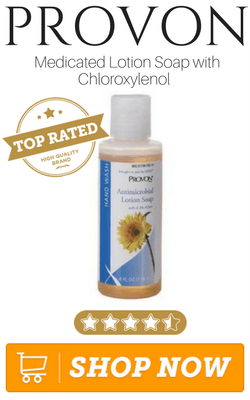
Provon is a mild medicated soap that some piercers have recommended. The APP’s current guidance favors sterile saline and a gentle, fragrance-free soap over antibacterial products, so check with your piercer before using it.
This germicidal medicated soap is antimicrobial. It kills or inhibits the growth of microorganisms.
Its active ingredient is chloroxylenol (PCMX), an antiseptic.
If your piercer wants you to use an antimicrobial soap, it’s a reasonable choice. Use it sparingly, since over-cleaning can irritate a piercing.
Customers say this mild liquid formula is gentle on the skin, unlike many other products on the market.
Its lotion base is meant to be less drying than many soaps.
Pros & Cons
It’s quite obvious that this soap is a professional grade product with many great features to it.
We’ll mention a few here to give you a quick overview of why Provon Medicated Lotion Soap is our pick if you want a medicated soap.
Provon is antimicrobial and mild for a medicated soap.
At an affordable price, this soap is highly rated. It has customer feedback thanks to the moisturizing properties this product safely holds.
It’s less drying than many generic soaps, which can dry out and crack the skin around piercings.
It works well on new and old piercings. The liquid form makes using this product very convenient. It means your product stays uncontaminated and protected.
The main downside is that antibacterial soaps can still irritate some healing piercings. If yours gets red or dry, switch to saline only and ask your piercer.
Piercing Aftercare Tips
An antibacterial soap is a big part of piercing aftercare, but it’s not the only thing you need to bear in mind when helping your piercings to heal.
Firstly, always wash your hands before you touch or clean the piercing. Sweat might irritate the piercing, so be sure to rinse the area after all exercise.
Make sure that your bed sheets are changed regularly whilst it’s healing, and clean clothing is very important if you have any body piercings.
For ear piercings, keep hats, hair products and your phone clean, since they touch the area often.
Don’t put a healing piercing in pools, hot tubs, lakes or the ocean, and choose showers over baths.
Always remember that although products can help the healing process along, it’s your body that’s actually doing the healing.
Give it a helping hand by eating well, drinking enough water and getting plenty of sleep.
Any products you do use should be fragrance-free. Avoid alcohol, hydrogen peroxide, iodine, ointments and products with benzalkonium chloride, which the APP says can irritate or damage healing tissue.
Are There Any Natural Remedies for Piercing Aftercare?
The simplest natural option is sterile saline, which is just salt and water in the right concentration. The APP no longer suggests mixing your own sea salt solution, and scented bath salts can irritate a fresh piercing.
Skip home remedies like tea tree oil and homemade aloe sprays. They aren’t proven to prevent infection and can irritate a healing piercing.
When To See A Doctor
See a doctor if you think your piercing is infected. Warning signs include spreading redness, increasing pain or swelling, yellow or green pus, red streaks, or a fever.
Don’t remove the jewelry on your own if you suspect an infection unless a doctor tells you to.
Conclusion
Hopefully now, with the help of our review, you know why it’s so important to take care of your new piercing.
You also know that sterile saline, gentle cleaning and leaving the jewelry alone matter more than any soap.
Whatever soap you decide on be sure to check out the product’s description and be mindful of all the key aspects we discussed.
The product we’ve chosen, Provon Antimicrobial Soap, is our pick if your piercer recommends a medicated soap.
For most people, though, sterile saline plus a mild, fragrance-free soap is all a new piercing needs.
Sources
- Suggested Aftercare for Body Piercings, Association of Professional Piercers
- Tattoos and Piercings Go Mainstream, but Risks Continue, Northwestern University Feinberg School of Medicine