
Best Juicer For Greens: Leafy & Healthy Juices At Home
Contents
- our top picks for a juicer for greens
- What are the health benefits of juicing?
- What types of juicers are on the market?
- Masticating Juicer
- Centrifugal Juicer
- What’s The Best Type of Juicer For Greens?
- What to look for in a juicer for greens?
- Chute Size
- Pusher
- Stability
- Foam Separator
- The 5 best juicers for greens review
- Omega J8006 Nutrition Center Juicer
- Pros And Cons
- Aicok Masticating Juicer
- Nutrihome Masticating Juicer
- Breville JE98XL Juice Fountain Plus
- Tribest Slowstar Masticating Juicer
- conclusion
- Sources
A juicer is a great investment for the health conscious individual.
If you don’t like eating your greens or simply don’t have the time to eat all your servings, juicers can save you lots of time.
Juicing is popular, but it’s best seen as an easy way to add produce to your day rather than a health shortcut.
It provides an easy, convenient way to start the day with plenty of vegetables in one quick and possibly even tasty drink (depending on your recipe).
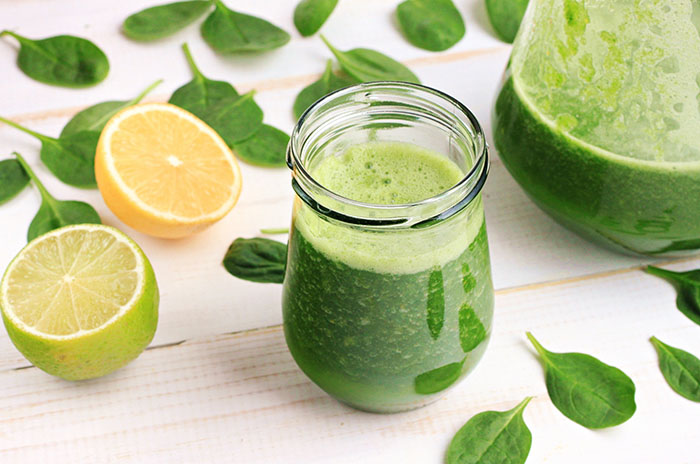
My favorite green juice recipe for a boost in the mornings uses spinach, kale, celery, parsley, some fresh pineapple, freshly squeezed orange juice and a few chia seeds for good measure.
You’re sure to figure your own favorite out soon!
Just google ‘green juice recipes’ for huge amounts of inspiration.
But let’s not get ahead of ourselves!
Before you can think about recipes, you’ll need a machine to do the juicing with.
If you’re looking for the best juicer for leafy greens, you might be confused by all the different types of juicers and models out there.
Not to worry, this guide will give you a rundown of the main types, including which type is best suited for juicing greens and the model we highly recommend for all your juicing needs.
our top picks for a juicer for greens
| Image | Model | wattage | color | Price | Rating | Buy Now |
|---|---|---|---|---|---|---|
| Omega J8006 Nutrition Center Juicer | Omega J8006 Nutrition Center Juicer | 110 | 7 options | $$$ | click here to see latest price | |
| Aicok Masticating Juicer | Aicok Masticating Juicer | 150 | Black and green | $ | click here to see latest price | |
| Nutrihome Masticating Juicer | Nutrihome Masticating Juicer | 150 | Orange and black | $ | click here to see latest price | |
| Breville JE98XL Juice Fountain Plus | Breville JE98XL Juice Fountain Plus | 850 | Stainless steel | $$ | click here to see latest price | |
| Tribest Slowstar Masticating Juicer | Tribest Slowstar Masticating Juicer | 200 | Red and black | $$$$ | click here to see latest price |
What are the health benefits of juicing?
Juicing isn’t any healthier than eating whole, raw fruits, but what’s great about it is you can get the best out of a variety of fruits into one tasty drink that you can enjoy.
This makes it easy to get the vitamins, minerals, and phytonutrients you need from fruits and vegetables.
If you have a hard time getting all the fruits and vegetables you need a day into your diet, you may be missing out on these micro nutrients.
Juice keeps much of the produce’s vitamins and minerals, but most of the fiber stays behind in the pulp.
Fiber is one of the big benefits of whole fruits and vegetables, so juice works best alongside them, not instead of them.
Want an extra boost?
Throw in some wheatgrass during your next juicing. It adds a grassy flavor and some vitamins, though the amounts in a typical shot are small.
A few safety notes
Homemade juice isn’t pasteurized, so wash your hands and rinse produce well under running water first. The FDA notes that untreated juice is riskier for children, older adults, pregnant women and people with weakened immune systems.
If you take warfarin (Coumadin), talk to your doctor before you start drinking green juice. Leafy greens like kale, spinach and parsley can change how warfarin works, so the amount you eat needs to stay steady.
What types of juicers are on the market?
There are two main types of juicers available:
Masticating Juicer
This type of juicer breaks through the skin and fibrous peel of fruits and vegetables.
It’s slower than a centrifugal juicer as it works to chew through tough skins and leaves.
It does this with an auger (a drilling device) that has a flighting (screw blade) that removes the pulp. Fruits and vegetables are crushed and the juice is strained through mesh.
The whole process is slow and creates less foam, which many people find gives a smoother juice.
Masticating juicers usually get more juice out of leafy greens than centrifugal models. They’re great for leafy greens, wheatgrass, and herbs too.
Many masticating juicers are extremely versatile and can be used to make baby food, sauces, ice cream, and more!
Finally, because the juicer runs at a slower pace and doesn’t heat up, they tend to last longer than other juicers.
Centrifugal Juicer
Centrifugal juicers work by chopping the fruits and vegetables with a flat cutting blade that is similar to a blender.
It spins at super high speeds from 3,000-16,000 RPMs. This helps separate the juice from the pulp (think of a washing machine on spin that gets rid of the excess moisture on clothing!)
The juice is strained and pulp is collected for you to empty later.
Some centrifugal juicers have a “pulp ejector” that will get rid of the pulp from the inside of the juicer once it gets full.
This is a handy feature because it means you don’t have to stop and open the juicer to rid of the pulp. If you do a lot of juicing, this is a feature to look for.
Centrifugal juicers are a more common and affordable than others. It operates at a high speed and you will get your juice quickly.
What’s The Best Type of Juicer For Greens?
The main two types of juicers that exist are centrifugal and masticating juicers (also known as cold press juicers).
If your plan is mainly to juice leafy greens, you’ll want to stick to masticating models for optimal results, as they tend to be the best juicers for greens.
Why, you may ask?
Simply put, masticating juicers are slow juicers that will press the juice out of the leaves.
Centrifugal juicers are great for their own purposes and are very useful for fruits and denser objects.
However, they don’t work all that well for leafy greens because they shred at a high RPM.
Because leafy greens aren’t dense, centrifugal juicers tend to just shred them into little bits rather than actually juicing them.
You’ll be left with pulp and bits rather than actual juice when juicing greens.
Fast spinning also whips more air and foam into the juice.
Whichever type you use, drink your juice soon after you make it.
By choosing a good masticating juicer, you’ll be squeezing the juice right from your precious greens, which also, conveniently, works in a much quieter manner than a centrifugal juicer.
What to look for in a juicer for greens?
Juicers come in a range of different sizes, not to mention you have masticating and centrifugal to choose from.
Which One is Best for Your Greens?
Generally, masticating juicers are the best for leafy greens. Even then, there are many features to consider.
As you can imagine, juicers are often messy on the inside as it works to extract as much juice as possible from your greens.
Any features that help reduce the mess you have to clean up will be helpful. Here are a few of the best ones to look out for.
Chute Size
An extra- large feed chute that can are wide enough to fit whole apples is most ideal. This means you don’t have to chop up larger fruits and vegetables first, saving you time.
But just because it’s a bigger feed chute doesn’t mean you should just throw everything in. Read the instructions to see if you need to do any prep, including coring apples, first.
Pusher
A pusher is also another useful feature to go for. This fits into your feed chute perfectly (so no bits can come flying out). It allows you to gently push the food into the juicer safely.
Not only does this protect your fingers, but it also helps prevent fruits and vegetable from becoming stuck, meaning you’ll have to stop the machine, dislodge the problem, and restart, since this will guide it along to where it needs to be with a little pressure.
Look for a pusher that fit comfortably into the palm of your hand, because you may need to add extra pressure for those tougher ingredients.
If something were to get stuck, then your masticating juicer should have a reverse option to help get it out without causing much of a mess.
Stability
You’ll want to make sure your juicer stays stable while it is working away, and usually, this is sorted with non-slip feet.
The majority of juicers usually have these, but always check to make sure the one you’re going for does.
Drop-stop spouts are also handy to have. These can stop excess juice from dripping onto your countertops.
Foam Separator
Not all juicers have a jug, but if you prefer one, look for one with a foam separator.
This will allow you to pour the juice into your desired cup and keep the foam behind.
If you’re not worried about foam, then you’ll need to make sure that the juicer can easily fit your cups, bottles, or glasses.
The 5 best juicers for greens review
Omega J8006 Nutrition Center Juicer

Bring in the Omega juicer. If you’re looking for the best juicer for greens, look no further than this masticating juicer.
With minimal parts to assemble, it’s incredibly easy to use.
The great thing about this juicer is its slow motor speed.
Running at only 80 RPM, it works slowly and keeps foam to a minimum.
Not to mention it’s incredibly quiet.
Don’t take this to mean that it’s low power though.
It has plenty of power for tough produce, easily squeezing juice from the fruits and vegetables you put in it.
It’s also easier to clean than typical centrifugal juicers and produces a smooth, low-foam juice.
This is accomplished with its auto pulp-ejection feature.
Amazingly, before the pulp is ejected, it’s pressed a second time, extracting every bit of juice this machine can get for you.
Think we’re done here?
Think again. This juicer doesn’t just juice.
Try using it to grind coffee beans, make fresh nut butter or ice cream, or mince all sorts of herbs.
This is seriously an all-in-one versatile package that will make your juicing and food processing that much simpler.
Omega has offered a long warranty on the J8006, so check the current terms before you buy.
Pros And Cons
Here we’ll get down to the details. We’ll start off with the painful parts.
Of course, the most painful thing about buying something is the price.
Relative to a lot of juicers, especially centrifugal juicers, this one is fairly expensive.
However, think about the silver lining here.
This juicer is multifunctional, comes with a long warranty and is easily worth the price tag with the results it gives.
Another plus for this model is its ease of cleaning, although that’s not just the case for this machine.
Many owners find it quick to rinse after use.
The pulp it will produce will be as dry as it can get, showing you just how efficient it is at extracting juice.
It’s a truly long lasting machine that will give you all the results you could hope for.
Aicok Masticating Juicer
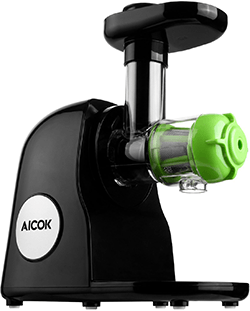
The Aicok masticating juicer is a simple and affordable way to get the most out of your juices.
It’s convenient and perfect for small spaces.
The Aicok juicer will comfortably juice your leafy greens and wheatgrass along with other fruits and vegetables.
It also has an auto-ejection for the pulp for easier cleanup.
If you only want a small amount, then this juicer is great.
However, if you want to fill a bottle for the day, then this juicer won’t help unless you do it in small batches due to its small space for only small cups.
Nutrihome Masticating Juicer
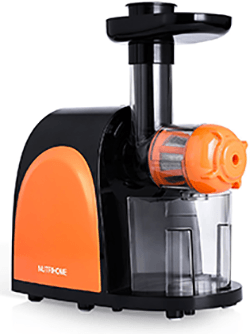
The Nutrihome masticating juicer is a stylish black and orange juicer that works at 80 rpm to keep the essential nutrients of your greens.
Despite the powerful motor, this juicer is quiet; the maker rates it below 60 decibels.
It will auto-eject pulp for continuous juicing and can be taken apart for easy cleaning.
How quick it is to clean the filters is something that many consumers love, along with how quiet it is.
It comes with a wide jug to hold plenty of juice.
Check the current listing for warranty terms.
Breville JE98XL Juice Fountain Plus
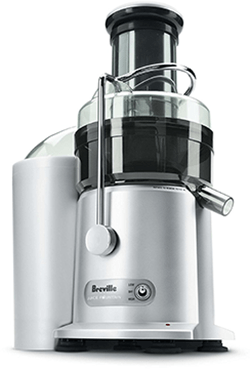
If you want your juice now, then the Breville Juice Fountain Plus will get it for you!
The maker says it can fill an 8 oz. cup in about five seconds.
The dual-speed motor works quickly with the stainless-steel blades and an Italian-made micro mesh filter. Breville says it extracts more juice and nutrients than similar juicers, but that’s based on the maker’s own testing.
It’s so powerful that you can even throw in pineapple chunks with the rind on.
There’s an extra-wide feed chute measuring at three inches.
It comes with a one-liter jug with froth separator, so you only get pure juice!
If the machine is overloaded either with ingredients or is getting overheated, then it will automatically shut down to prevent any damage.
Tribest Slowstar Masticating Juicer
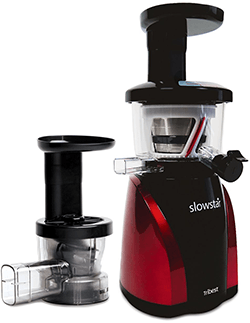
If you have some spare cash and want a mega juicer, then introducing the Tribest Masticating Juicer.
It’s the most expensive one on our list, but it does the job and does it well.
Operating at 47 RPM, this juicer works slowly and keeps foam and oxidation low.
However, it has a dual blade auger so you’ll get your juice faster.
A cap on the end of the nozzle means you don’t need to worry about any leakage onto your countertops.
It also comes with an extra mincing attachment to help chop herbs, garlic, and much more.
It’s extremely versatile and comes with a long warranty (check the current terms), making it a good investment.
conclusion
If you’re specifically looking for the best juicer for greens, you’ll be hard-pressed (get it?!) to find a better juicer than the ones listed above.
They’re all specifically designed for the job and have earned great customer reviews.
So what are you waiting for?
Just remember that juice is an addition to whole fruits and vegetables, not a replacement for them.
Get your hands on one and start juicing today!
Sources
- What You Need to Know About Juice Safety, U.S. Food and Drug Administration
- Taking warfarin, MedlinePlus (NIH)