Essential Oils Guide For Allergies, Asthma, Cough & Sinus

Contents
- Can Essential Oils Actually Work for Coughs, Colds & Asthma?
- How to Use Essential Oils for Asthma
- Top 5 Essential Oils for Allergies, Asthma, Cough & Sinus
- Respire – Living Pure Essential Oils #1 Respiratory Essential Oil & Sinus Relief Blend
- Breathe Ease Balm Puriya Natural Chest and Nasal Congestion Relief
- Elementa – Breathe Free 15 ml
- NETI INHALER Sinus & Lung Relief. HIMALAYAN SALT AIR!
- Eucalyptus Oil – Eve Hansen 4oz USDA
- Sources
When the temperature dips and the season comes around that force you to carry tissues or throat lozenges, you wonder what you did to deserve such a fate. You feel assaulted by the same air that’s meant to be keeping you alive.
That’s not how it should be. You should be able to enjoy the winter season without having to blow your nose twenty times a minute, cough up a lung or drink terrible tasting liquid to counter the symptoms.
So, are essential oils a useful extra?
Essential oils can't cure a cold, allergies or asthma, but some people find certain scents soothing alongside their usual care.
Simply put, these oils are concentrated extracts from plants. They are potent, which is why they need careful use. Many people simply enjoy their scent.
Their popularity is increasing every day, with sales exploding and the total value of the market expected to reach $11.67 billion by 2022.
There are still many people who are in the dark about this alternative. That’s why I’ve compiled a list below. It’s more than a list. It's a guide to five popular essential oil products marketed for stuffy noses and coughs.
Can Essential Oils Actually Work for Coughs, Colds & Asthma?
If you're a bit sceptical of the ability of essential oils to clear up that cough or cold or help you with your asthma, you're not alone.
Being natural doesn't make a remedy weak, but it doesn't make it proven or safe either. The National Center for Complementary and Integrative Health notes that aromatherapy research is limited for many of the uses people try it for.
Lab studies show some essential oils have antibacterial activity, but that is not the same as treating cold and allergy symptoms in people. Colds are caused by viruses. Peppermint essential oil has antispasmodic properties that some people find helpful for coughs, though evidence in people is limited.
Eucalyptus oil has been studied for its effect on inflammation in the respiratory system, and many people find its scent makes breathing feel easier. That is not the same as treating the illness behind your symptoms.
If you want to try them, use them as an extra, never as a replacement for medicine your doctor prescribes.
How to Use Essential Oils for Asthma
There is no good evidence that essential oils are effective in treating asthma. Some people find a scent relaxing, and stress can worsen asthma. But strong scents and fumes can also trigger asthma symptoms in some people.
If you have asthma, talk to your doctor before using essential oils, and never use them in place of your medicine. During an attack, follow your asthma action plan and use your quick-relief inhaler.
If you do try a scent, dilute a drop or two of a gentle oil such as lavender in a carrier oil (almond, coconut, olive).
Patch test it on a small area of skin first, and stop if you cough, wheeze or your skin reddens.
Some people inhale steam with a drop of oil added. Steam can irritate sensitive airways and hot water can scald, so skip it if it makes you cough, and never do it with children.
Lastly, you can use a diffuser for a lighter scent. Run it for short periods in a ventilated room, and keep pets out of the room.
Top 5 Essential Oils for Allergies, Asthma, Cough & Sinus
Respire – Living Pure Essential Oils #1 Respiratory Essential Oil & Sinus Relief Blend
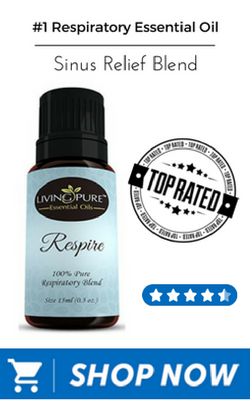
This is a popular organic respiratory blend from Living Pure.
Some marketing for blends like this mentions bronchitis, sinusitis, pneumonia and lung infections. No essential oil treats these conditions; see a doctor if you have a fever, chest pain or trouble breathing.
It is not an asthma treatment.
It's a spicy-smooth blend that many users find refreshing when their nose feels stuffy.
Breathe Ease Balm Puriya Natural Chest and Nasal Congestion Relief
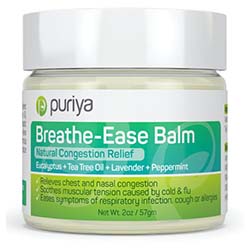
Breathe Ease Balm is a chest rub made as an alternative to classic vapor rubs.
Like any menthol-style rub, it should not go on the face or near the nose of babies or young children, since menthol can affect their breathing.
It's made with essential oils such as peppermint and lavender.
Essential oils for stuffy nose and essential oils for coughing have been blended together to bring a relief that is well deserving of a spot on this guide.
Elementa – Breathe Free 15 ml
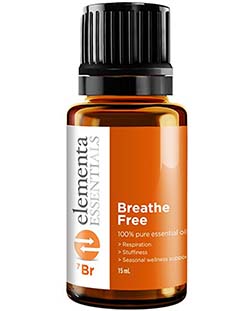
Breathe Free did with Elementa what the world of respiratory problems needed.
It's a pleasant-smelling blend marketed for seasonal stuffiness.
Myrtle leaf and cedar wood round off the ingredients. It won't stop wheezing, and new or worsening wheezing needs a medical checkup.
If spring and summer allergies bother you, proven options such as antihistamines and steroid nasal sprays are worth discussing with a pharmacist or doctor.
NETI INHALER Sinus & Lung Relief. HIMALAYAN SALT AIR!
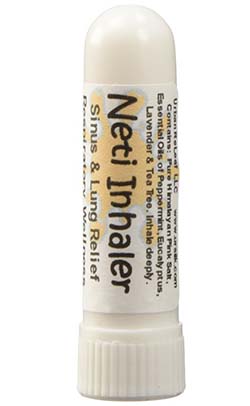
The Neti Inhaler pairs Himalayan salt with an essential oil blend and is marketed for respiratory problems. It does not kill germs in your airways.
Salt inhalers are popular, but good evidence that dry salt inhalation helps lung conditions is lacking.
It is not a substitute for prescribed nasal sprays or asthma inhalers.
Eucalyptus Oil – Eve Hansen 4oz USDA
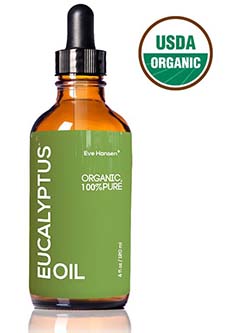
This isn’t to say that Eve has the worst product or the one you should consider the least. After all, this is a guide to the TOP FIVE essential oils.
Eve Hansen’s Eucalyptus Oil is made with nothing more than Eucalyptus and it utilizes an unconventional glass dropper.
Many people use eucalyptus oil in a diffuser or steam for a stuffy nose. Never swallow it: eucalyptus oil can cause seizures if swallowed, so keep the bottle away from children.
It won't replace medicine for allergies or infections.
Essential oils are popular, but they are not a substitute for allergy medicine or for treatment of a sinus infection.
See a doctor if your symptoms are severe, last more than about a week, or come with a high fever or shortness of breath.
If you don’t want to apply any of these topically, you can utilize most of them with a device called a diffuser.
Instead of rubbing it on your body, you place it in a candle burning or electric device that vaporizes the liquid and releases it into the air for an essential oil infused atmosphere, so all you have to do is breathe.
Used with care, a pleasant scent can be a small comfort while your usual treatment does the real work.
Sources
- Aromatherapy, NCCIH
- Essential oils: Poisonous when misused, Poison Control (National Capital Poison Center)
- Asthma: Treatment and Action Plan, NHLBI
- Peppermint Oil: Usefulness and Safety, NCCIH