H2O Purifier: Get The Best Hiking Water Filter
Contents
- Difference between water purifiers and water filters
- Types of Water Treatment tools
- UV Purifiers
- Chemical Treatment
- Gravity Filters
- Squeeze Filters
- Straw-Style Filters
- How do water filters work?
- Expert water treatment tips
- Top 5 things to consider before buying a water filter
- Criteria for choosing the best H20 Purifier
- 5 Best H20 Purifier Reviews
- Sawyer Products Mini Water Filtration System
- Pros & Cons
- Decision
- LifeStraw Personal Water Filter
- LifeStraw Go Water Filter Bottle
- Sawyer Mini
- Survivor Filter
- Conclusion
- Sources
The sweat drips from your brow as you climb over the last step and plant your feet at the top of the mountain.
Your throat is dry and irritable and your breathing heavy. Every time you swallow it’s like a handful of rocks are sliding down your throat. You pull out your water bottle and scramble quickly to open the top.
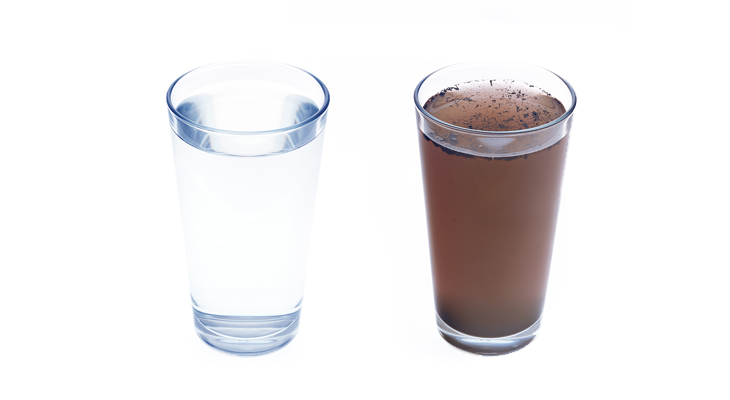
You go for a swig and look down to see tiny dark particles and not-so-clear water waiting for you at the bottom.
Dry throat or your health?
You shouldn’t have to make that choice. And with Sawyer Product’s you don’t have to.
Instead, you get the best hiking water filter. Made to fit most drinking apparatus, these filters remove bacteria and parasites so stream water is much safer to drink.
Most filters don't remove viruses, though, so it helps to know when to add a disinfection step.
Difference between water purifiers and water filters
Water purifiers and water filters are both great options for anyone who spends a lot of time outdoors. If you’re struggling to tell the difference between these two bits of kit, don’t worry, I’ve got you covered...
Water purifiers go a step further than filters: they remove or kill viruses as well as bacteria and parasites. They do this with chemicals such as chlorine or iodine, UV light, or very fine filters.
Most chemical and UV purifiers don't remove dirt or debris, so cloudy water should be filtered first.
Water filters often offer more of a physical barrier in order to clean water. Many backpacking filters use hollow-fiber membranes, and some add activated carbon to improve taste.
The CDC says a filter with an absolute pore size of 0.3 micron or smaller removes bacteria and parasites, but not viruses.
That's why the CDC advises filtering first and then disinfecting when viruses are a concern.
Ideally, however, you’ll just have to buy one system that will get the job done. If you’re hiking, you want something lightweight and effective. Luckily, I’ve found several options for you...
Types of Water Treatment tools
UV Purifiers
UV purifiers use ultraviolet light to kill germs rather than filter them out. They can kill parasites, bacteria and viruses in small amounts of clear water.
Cloudy water blocks the light, so filter it first, and carry spare batteries.
Chemical Treatment
Chemical treatments use chlorine, iodine or chlorine dioxide tablets or drops to kill germs.
Chlorine and iodine kill bacteria and viruses but don't work well against parasites. Chlorine dioxide can kill Giardia and is somewhat effective against Cryptosporidium. People who are pregnant or have thyroid problems should avoid iodine.
This method of water treatment can give water a slightly different aftertaste, however, which is something to bear in mind if you’re travelling with anyone fussy or very young!
Gravity Filters
Gravity filters let water drain from a hanging bag through a filter cartridge, so you don't have to pump or squeeze. They are handy for groups and for filling several bottles at camp.
Like other filters, most don't remove viruses.
Squeeze Filters
These are a really great option for any travellers or hiking enthusiasts. These are a form of filter, so they remove bacteria and parasites but don't work against viruses.
This is something to bear in mind depending on where you’re planning on using it.
These are essentially pouches that you can fill with water, and contain a filter inside that gets rid of dirt particles as well as bacteria. Lovely stuff.
Straw-Style Filters
These are essentially straws that are designed to fit into water bottles, allowing you to drink safely. You can also drink directly from freshwater sites, as the filter in the straw actively prevents particles of dirt entering your mouth.
This type of filter doesn’t use any chemicals, so is great for those who like to keep it natural and simple. It works to remove waterborne bacteria and protozoa, but not viruses, so it isn't enough on its own where water may be contaminated with human waste.
How do water filters work?
Each water filter works slightly differently to ensure that you’re only drinking clean, safe water.
Some use a physical filter, or several layers of physical filters, to prevent bacteria and particles of dirt from entering your mouth. Some use chemicals to kill off bacteria, and some use UV radiation to target bacteria and viruses.
Each filter is built differently, so it’s worth having a browse to find one that’s the right shape and size for you. We’ve found some of the best water filters out there so hopefully one of them catches your eye.
Expert water treatment tips
Depending on which type of water filter you’ve gone for, there are some things to bear in mind. For one, follow any guidance given to you by the manufacturer. This will make sure you’re getting the most from your water filter, and that it’s working properly!
Wear and tear are inevitable with most pieces of kit, but this is definitely something to pay attention to when using a water filter. If there’s any sign of damage to your water filter, it could be a sign that it isn’t working properly.
With some tools, a bit of scuffing won’t really affect their efficiency. However, with something that’s preventing harmful bacteria, viruses, and dirt from entering your mouth, you want to make absolutely sure that it’s working...
Top 5 things to consider before buying a water filter
- Consider where you’ll be travelling, as this can affect what your filter will need to be doing for you. On many backcountry trips, parasites such as Giardia and bacteria are the main worry. Where water may be contaminated by human waste, or when you travel to places with poor sanitation, also disinfect for viruses or boil your water.
- Some water filters run on batteries, which is worth thinking about. You may want to get rechargeable batteries, or take plenty of spares with you on your trip. Physical filters can be a better option if you don’t want to have to think about charging!
- Chemicals or no chemicals? Another important decision to make. Some chemical filters can leave a slightly dodgy aftertaste, so you may want to opt for a UV filter or straw-style filter if this is something that will bother you.
- Think about how much room you’re going to have in your bag or vehicle. Options like the straw filter are great for people who like to travel light, whereas bigger options can work well if you’re travelling in a large van or car!
- Cost! This is always going to be a consideration when buying any new piece of kit. The price of a filter doesn’t necessarily directly correlate with how great it is. Some cheaper products can be just as effective as high-end ones. By all means, stick to reliable, well-known brands, but bear in mind that you may be paying for the name more than the technology.
Criteria for choosing the best H20 Purifier
The ideal water purifiers are those that blend portability and purification to the max. They enable any person who wishes to have clean purified water and a trip without hassles just that.
You’re looking for weight that's under 5 ounces, durability for hiking, canoeing, rapelling or any outdoor activity, top notch filtration and easy access.
Clean water is essential for any human, that’s a given, but to have it on the go while you indulge in some of your favorite activities is a desire you can fulfill.
Life is all about those moments that make us happy. If hiking and outdoor activity makes you happy, make sure you’re prepared to enjoy it to the fullest with the best hiking water filter.
5 Best H20 Purifier Reviews
Sawyer Products Mini Water Filtration System
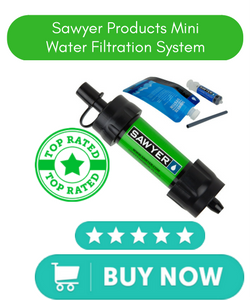
The Mini Water Filtration System is simply the best product you can find in terms of hiking water purifiers and reliability in all aspects.
A weight of 2 ounces makes it ideal for any portable activity or outdoor recreational situations.
Hiking has never been made more accommodating with water consumption than now.
Sawyer says it removes bacteria such as those behind cholera, E. coli and Salmonella infections, plus parasites. Like other filters, it does not remove viruses.
And the special perk of this product is that it includes a 16-ounce reusable drinking pouch. In terms of perks and compared to other products Sawyer Products has truly created the best water filter for hiking.
Pros & Cons
As a water filtration system, Sawyer Products has gone above and beyond creating a mini filtration system that outshines its core problems.
A 16-ounce reusable pouch makes up for the ability to enjoy clean water on those longer hikes. Sawyer rates it for up to 100,000 gallons with regular backflushing.
And coming in weighing only 2 ounces bolsters its ability to satisfy even the most hardcore of hiking fanatics.
There's still a bit of work involved in getting water from the pouch to water bottles or other water containers you own. This small annoyance can be made up for by all pros this product offers. As the best hiking water filter, it doesn’t get any better than Sawyer Products.
Decision
I would highly recommend this product based on its sheer quality in production and what it's made to do.
The weight, reusable pouch and vast filtration abilities only add to the many more reasons you should give it a chance. Anyone should use it regardless of their hiking experience.
It's not for the best hikers. It’s the best water filter for hiking.
LifeStraw Personal Water Filter
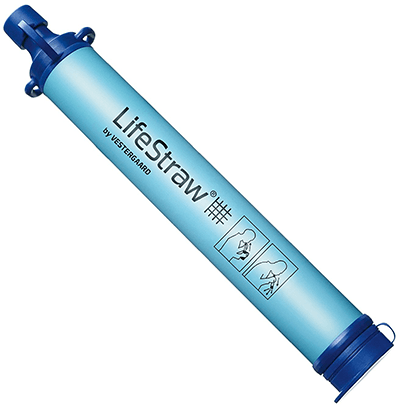
This is one of those straw-style filters I mentioned earlier.
It works by creating a physical barrier to dirt and bacteria.
It doesn’t require any batteries or charge, and contains no chemicals or BPAs.
It removes waterborne bacteria and protozoa, but not viruses.
This straw can be used directly from the water source, or screwed onto a water bottle to make things easier for you.
It’s super lightweight and easy to fit in any luggage or travel bags, so is perfect for hiking enthusiasts and travellers alike.
It contains a small membrane that traps bacteria and dirt particles. After using this, create a backwash by blowing back into the straw and flush the filter out.
It won't remove chemicals or salt, so don't use it on salt water or chemically polluted water, but it's great for streams and lakes.
LifeStraw Go Water Filter Bottle
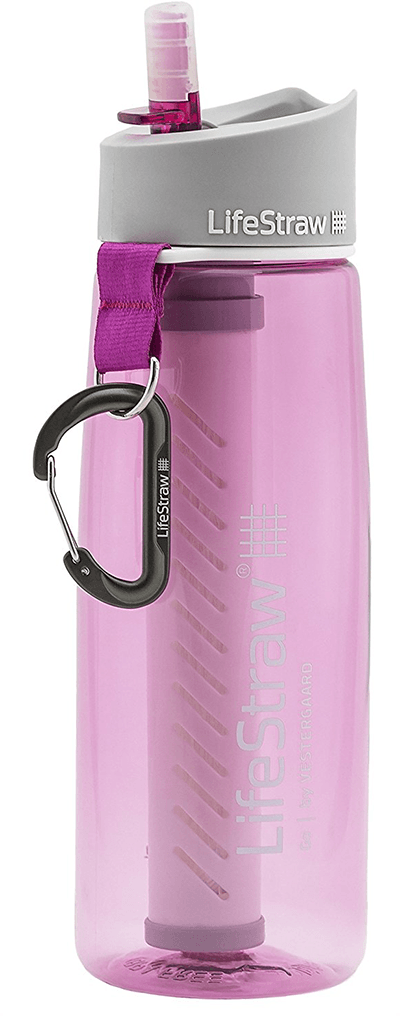
Another product from LifeStraw because they know exactly what they’re doing.
This uses a straw-style filter in a bottle and makes the most of a two-stage filtering process.
It works to rid water of bacteria and particles of dirt that may be damaging to your health.
As with the straw filter, this is totally BPA- and chemical-free, and relies on a membrane to remove bacteria and parasites.
The bottle is super useful if you want to carry drinking water with you.
It’s a bottle designed for active people, so is lightweight and leak-proof, making it easy to stash in your backpack.
Sawyer Mini
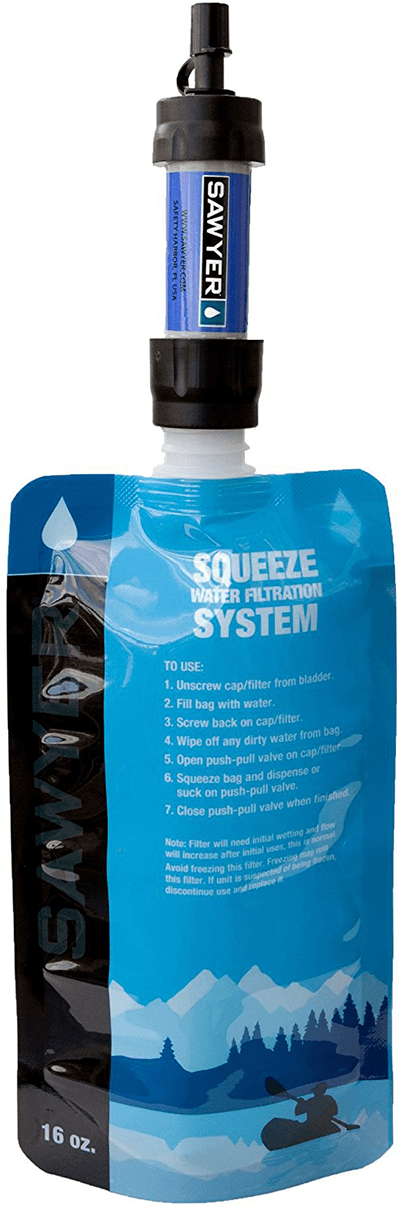
This is a brilliant example of the squeeze filters I mentioned earlier.
It has clear arrows on the pack itself, allowing you to direct stream or lake water into one end of it.
From here, it passes through a filter in the mid-section and lets you squeeze water through it so that you’re left with clean drinking water.
The pouch is about palm-sized, so is great for anyone who is tight on space in their travel bag!
It's an affordable filter that really works.
The distributing end of this can easily be screwed onto plastic bottles, or used directly to drink from.
Survivor Filter
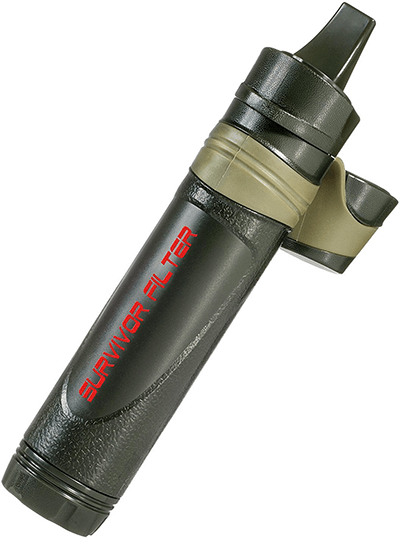
This three-stage water filter system is a great option for anyone who enjoys camping and hiking.
It uses various methods, such as activated carbon and membrane filters, to get rid of bacteria and dirt in water.
Each of the three filters is easy to replace separately, meaning that you only need to buy one bottle.
I love that this product lasts so long, and that it's easy to fix if you need to replace a filter.
It really does the job.
It also comes with four pre-filters to get rid of any physical components such as leaves and twigs, which helps the main filters last longer.
Conclusion
Most people who hike, whether it be recreationally or fanatically, don’t know about the pure benefit of a portable filtration system.
Maybe after they read this article they will see what you and I now know. That clean water at any time you need during physical activity far from any water source is amazing.
You don’t get any better than low weight, vast filtration numbers and easy to use portability all wrapped up in one convenient package.
So, stop taking my word for it and find out yourself. Whether you are a recreational or avid hiker prepare to be amazed at how much your hiking experience improves.
Whatever you choose, filter cloudy water first, and boil or disinfect when viruses are a concern. A rolling boil for 1 minute (3 minutes above 6,500 feet) kills all types of germs.