MCL Brace: Complete Guide To Choosing An MCL Knee Brace
A problem with your MCL can be a nightmare, especially if it means that you can’t continue with the things you love.
If you’ve injured your MCL, your medial collateral ligament, this means that you’ve either torn or sprained the ligament which runs along the inside of your knee.
It helps to connect your shin and thigh bones to keep your knee stable and working properly.
If you think you’ve hurt your MCL, see a doctor first. According to the AAOS, low-grade MCL injuries are usually treated without surgery, using rest, ice, compression, a hinged knee brace for stability, and physical therapy.
A brace can support the knee while it heals, but the right type depends on how bad the injury is.
There are a large variety of knee braces on the market today. They all claim that you’ll be back on your feet and pain-free with their product.
However, it pays to do your research, ask around, and pick one that’s right for you.
We’ve narrowed the selection down to the cream of the crop. If you’re still on the hunt for an MCL knee brace, or are completely overwhelmed by the number of options at your fingertips, leave it to us!
Read on for all the details on the best brace for your buck.
Choosing a Brace
Any knee injury can put you on the sidelines for weeks. Once you’ve healed, you may still experience pain or discomfort.
An MCL brace can help reduce the effects of your injury. It allows for movement that would otherwise give you grief.
A good knee brace will help offer support of the injured area without irritation to the skin.
You shouldn’t feel any pinch points or sweat more than usual if the material is made with the right breathability.
Straps are definitely a plus, so you get just the right fit. A sleeve can work too, but it has far less flexibility when it comes to size.
Since everyone’s legs are different in size and shape, you can imagine that straps help to close the gap.
Knee Brace Support by ZSX SPORT
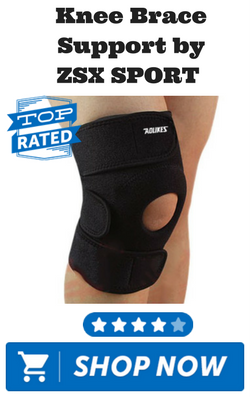
The Knee Brace Support by ZSX SPORT is a strap-style knee support with an open kneecap design.
The maker markets it for knee pain from sports, running and walking. A soft support like this is not a substitute for the hinged brace a doctor may recommend for a torn MCL or ACL.
It’s got a fully adjustable strap so that you get just the right fit, along with enough compression to help you through a strenuous exercise.
There are 4 sizes to even further attain just the perfect fit, in small, medium, large and extra/extra-extra large.
Your patella (knee cap) is stabilized in this type of knee brace for great movement without strain.
Pros
The Knee Brace Support by ZSX SPORT is more slender than a lot of other brands. That makes it easy to flex and move around in.
The patella support means that it provides compression in all the right places, especially where you need it most.
I love the strap, as it gives an even more custom fit, much more so than you’d get with a sleeve.
The material is soft enough that it won’t cause any irritation to sensitive skin.
Cons
There are those who prefer a closed area over the knee cap, and if so, this MCL brace isn’t for them.
The Velcro on the support strap may wear over time.
In Summary
This is a comfortable, adjustable option for mild knee support.
Check with your doctor or physical therapist that a soft support suits your injury, especially in the first weeks after it happens.
Sports and running related injuries are common and they can certainly take a lot of time and patience to heal before you’re back to normal activities.
It’s always important to let our bodies rest and ensure that they can take what we’re throwing at them.
To Wrap Up
Because of the weight that they take on a day to day basis, our knees deserve our attention and care.
If you’re feeling pain in that area, don’t ignore it and assume it’ll go away.
Wearing an MCL knee brace can help support this important joint and allow it to recover while you resume some of your fitness needs. Follow your clinician’s advice on when to return to sports.
Take care of your knees so that they can continue to take care of you.
Sources
- Collateral Ligament Injuries, OrthoInfo (AAOS)
- Sprains and Strains, MedlinePlus