Alleviate Skin Problems! Our Guide To The Top Pimple Cream
Contents
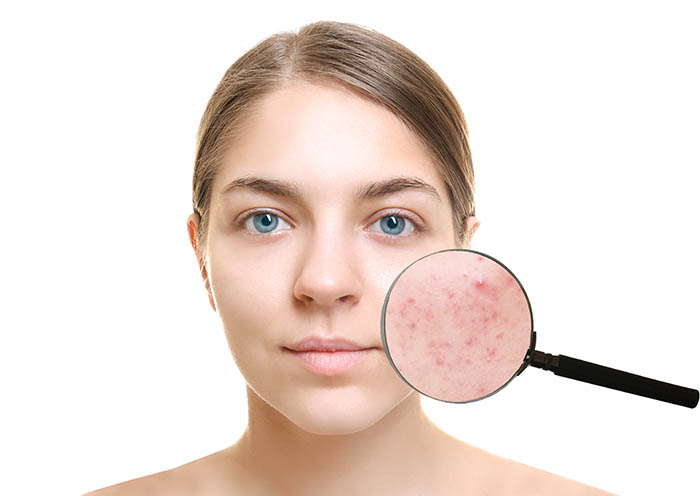
You’ve probably had pimples or suffered from acne at some point in your life. Most people have pimples or acne during their teen years. It’s possible for adults to get pimples, too. In adulthood, acne is more common in women, and one skin care brand’s estimate puts it at 14% of women in their 40s.
Do you suffer from pimples?
Pimples can cover your face, neck, chest and back. When this happens, you want to know how to treat pimples.
When searching for a pimple cream, you will often see the terms acne and pimple used interchangeably. Acne is the skin condition; pimples are one of the bumps it causes.
A pimple forms when a pore gets clogged with dead skin cells and sebum, the oil made by your skin’s sebaceous glands.
Acne happens when those plugs build up in the hair follicles. Bacteria in the clogged pore can then trigger redness and swelling. Here’s a guide to pimple creams and acne treatment products. They range from one-step to three-step treatments.
According to the American Academy of Dermatology, benzoyl peroxide reduces acne-causing bacteria, and salicylic acid unclogs pores. Give any treatment at least 6 to 8 weeks before judging it.
Mario Badescu Drying Lotion
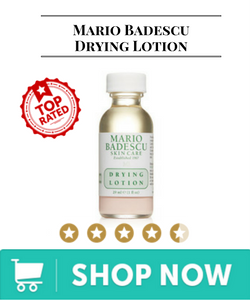
Mario Badescu Drying Lotion is a spot treatment meant to help dry out pimples.
The Drying Lotion contains salicylic acid, sulfur, zinc oxide and calamine lotion.
You dab it on individual pimples at night.
The sulfur and salicylic acid can be drying, so use it only on spots rather than your whole face.
X Out 90 Day Wash-In Combo with Spot Corrector Acne Treatment
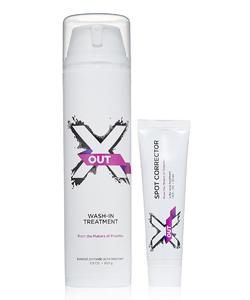
X Out 90 Day Wash-In Combo is a wash-in treatment. You wash your face with it, and the brand says it leaves an over-the-counter acne medicine on the skin to keep working.
X Out is a one-step product.
Customers like the fact that it’s easy, because you just have to wash your face.
Follow the label directions, and cut back if your skin gets dry or irritated.
X Out has been sold by the makers of Proactiv. Check the current label for active ingredients.
Clinique Acne Solutions Spot Healing Gel Salicylic Acid Acne Medication
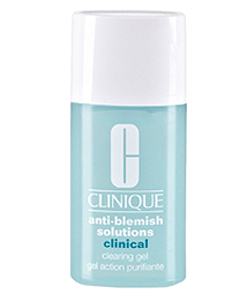
Clinque Acne Solutions Spot Healing Gel is a fast drying clear gel that helps to reduce pimples and promote healing.
It’s a topical non-prescriptive gel that also soothes irritation and redness. Use the gel by applying a layer to your face twice a day after washing.
You can also apply to specific spots of a breakout, if you’re using another acne treatment. This product is a part of the Clinique Acne Solutions collection.
Clinique is a well-known skin care brand owned by The Estée Lauder Companies.
Clean & Clear Clear Advantage Acne Spot Treatment
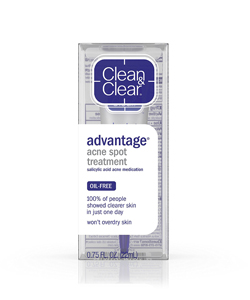
Clear Advantage Spot Treatment contains 2% Salicylic acid acne medication.
The brand says it starts working on pimples within hours. Salicylic acid can still dry or irritate skin, so start slowly.
The Salicylic acid then penetrates the pores and begins to clear your pimples. Clear Advantage Spot Treatment reduces the size of pimples, swelling and redness.
After washing your face, you can apply a thin layer of the cream to your skin or apply to the infected area.
Clean & Clear Clear Advantage Acne Control Kit is also available if you want a more extensive 3 step treatment program. Clean & Clear is a subsidiary of Johnson & Johnson.
10% Benzoyl Peroxide Acne Cream Gel Dr Song Spot Treatment Lotion
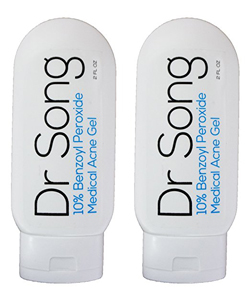
Dr. Song Spot Treatment Lotion contains Benzoyl Peroxide. Customers give this product great reviews for spot treatment of pimples.
It’s a gel that absorbs quickly into the skin.
Benzoyl peroxide is the main acne-fighting ingredient. A 10% strength can be more irritating than lower strengths, so try it on a small area first.
Benzoyl peroxide can also bleach towels, pillowcases and clothing, so let it dry before it touches fabric.
Conclusion
Over-the-counter pimple creams with benzoyl peroxide or salicylic acid work well for many people with mild acne. Use them consistently and give them several weeks.
If you get burning, swelling, hives or trouble breathing after using an acne product, stop and get medical help.
See a dermatologist if your acne is painful, leaves scars, or hasn’t improved after trying a few treatments. Prescription options can help.
Sources
- Acne: Diagnosis and treatment, American Academy of Dermatology
- Acne Types, Causes, & Risk Factors, National Institute of Arthritis and Musculoskeletal and Skin Diseases (NIH)