Rosemary Oil For Hair Growth: Does It Really Work?
Contents
Hair growth products seem to be very much in demand right now, for all ages.
There are all kinds of reasons for wanting to seek out hair growth products.
Some may wish to retain or regrow lost hair as a result of an illness, or the overuse of styling irons leading to hair thinning. Some just might want to stave off the aging process.
With there being so many methods and products on the market claiming to be the best, it can be difficult to decide which ones actually work and which ones are all just hype.
Rosemary oil is one natural option with some early research behind it. While rosemary is most traditionally associated with enhancing memory, it is now popular for hair care too.
We’ll explain everything you need to know about rosemary oil for hair growth and what product is the best rosemary oil for hair growth.
How Does Rosemary Oil Help Hair Grow?
Is it better than proven treatments? The evidence is limited. The best-known study is a small 2015 trial in 100 people with pattern hair loss.
In that trial, rosemary oil and 2% minoxidil both increased hair count after six months, with no significant difference between them. Neither showed a change at three months, and scalp itching was more common with minoxidil.
Rosemary may improve circulation in the scalp, but researchers haven’t confirmed how it works. Claims that it slows hair graying, prevents balding or treats dandruff are not supported by good evidence.
Some people add a few drops of rosemary oil to their shampoo or conditioner and massage it into the scalp.
Because rosemary essential oil is potent, it should be diluted with a ‘carrier’ oil to lower the risk of skin irritation. This can be coconut oil, jojoba oil or almond oil, to name a few.
These are mixed as you would with shampoo and conditioner above. There are even products available that have already been mixed with a carrier, which are very useful.
Patch test any new oil on a small area of skin first. Now let’s look at the product we’ve rated as one of the best.
Hair Growth Botanical Renovation – Rosemary Oil & Lemongrass
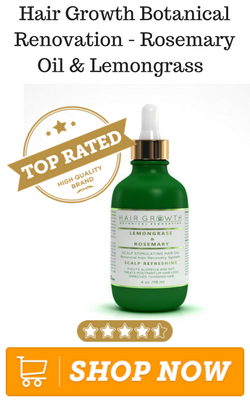
This is a great product and one of the key features is that there’s no need to dilute or mix with a carrier.
You don’t have to spend money on other products to use with your rosemary oil.
Hair Growth Botanical Renovation meets the requirements we look for in a rosemary oil hair product. The maker markets it for thinning hair, including after pregnancy.
It is a cosmetic product, not a proven treatment for alopecia or postpartum hair loss.
According to the maker’s directions, use it before shampooing about 2-3 times a week. Simply part your hair and apply 2-4 drops along your roots.
Massage into your scalp, then leave for 20 minutes for best results. Continue to shampoo, condition, and style as usual.
It pairs rosemary with lemongrass and other plant ingredients.
Pros And Cons
To know exactly what you’re getting with a product, it’s important to consider the pros and the cons.
Here is how Hair Growth Renovation stacks up.
Benefits
This hair care product is easy to use, helps fight oiliness and requires no ‘carrier oil’ before use.
It is marketed for thinning hair. Rosemary oil has some early evidence for pattern hair loss, but results take months and aren’t guaranteed.
Downfalls
If you’re pregnant or breastfeeding, have epilepsy or high blood pressure, or have sensitive skin, ask your doctor before using rosemary oil. Stop if your scalp gets red or itchy.
Also, it’s been said that the strong pungent smell from this product can be off-putting to some. However, this comes down to personal preference.
Conclusion
Overall, rosemary oil for hair loss is a low-cost option with limited but promising evidence. Focusing on and choosing a product aiming to promote hair growth and not just prevent hair loss is a great place to start.
It is affordable and easy to use, so it may be worth a try.
Sudden, patchy or heavy hair loss can have medical causes, such as thyroid problems or iron deficiency. See a doctor or dermatologist for a diagnosis before relying on any oil.
Sources
- Rosemary oil vs minoxidil 2% for the treatment of androgenetic alopecia: a randomized comparative trial, Skinmed (via Europe PMC)