Best Fluoride Water Filter: What Actually Removes Fluoride

Do you want safe, fresh, and tasty tasting drinking water for your family?
Many US communities add fluoride to tap water, and some water contains fluoride naturally. The CDC recommends 0.7 milligrams per liter, a level it says cuts cavities by about 25% in children and adults.
Like many substances, fluoride can cause harm at high doses, which is why water systems control the level. The American Cancer Society says there's no conclusive evidence that fluoride in water causes cancer.
Some people still prefer to remove it. Groups opposed to fluoridation suggest ways to reduce possible harm, and a filter is the usual choice. Most water filters on the market, however, don't remove fluoride.
If you remove fluoride at home, ask your dentist whether your kids need fluoride from another source, like toothpaste or varnish.
The filter types that can reduce fluoride are reverse osmosis, de-ionizers (ion-exchange resins) and activated alumina. Distillation also works.
There are also carafe water filters, faucet mounted water filters, counter top, or under the sink filtration systems. Read on for more information about water filters that reduce fluoride and review a great product that you may want to consider.
We'll focus on the AquaGear Water Filter Pitcher, which has had good reviews from customers.
Criteria
When you purchase a fluoride water filter, there are a few things to look for.
First, does the filter actually remove fluoride?
Standard activated carbon filters, the kind in most pitchers and fridges, do not remove fluoride. Look for reverse osmosis, ion exchange or activated alumina, and check the label for fluoride specifically.
You want a filter that's BPA-free and certified by NSF International or a similar body. The CDC suggests checking the label for the exact contaminants a filter is certified to remove.
What is BPA?
It's a man made industrial chemical, used to make products like water and juice bottles, food containers, etc. Some research suggests BPA is also harmful to your body, so now many companies produce BPA-free products.
When looking for a water filter, research what contaminants the filter actually removes and the percentage of removal.
For example, Aquagear says its pitcher filter removes about 90% of fluoride. Confirm claims like this with independent test data or certification.
On that note, also do some research to see what contaminants or pollutants that your tap water contains. You want your new filter to remove as many contaminants as possible.
Aquagear Water Filter Pitcher
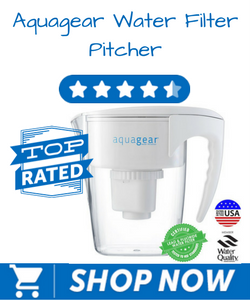
Aquagear Water Filter Pitcher uses a 150-gallon filter. The company says it reduces dozens of contaminants, including fluoride.
The brand describes its filters as BPA free and made from food-grade materials.
Each filter is rated for about 150 gallons, which the company says lasts up to six months. Change it on schedule, as the CDC advises for any filter.
Check the current listing for warranty terms.
How do the AquaGear filters work?
It uses a five-stage filter process with micron pores and activated coconut carbon derived from coconut shells. Absorbent carbon removes contaminants from your tap water.
As the water passes through the filter, the absorbent carbon traps and neutralizes the pollutants. Aguagear also uses ion-exchange medias and adsorption.
Here's another explanation. Through adsorption, activated carbon and ion exchange, your tap water turns into tasty, filtered water.
Adsorption is different from absorption in that adsorption occurs when particles or molecules adhere to a surface. Absorption is the process whereby a fluid is dissolved by a liquid or solid.
The filters also include an antimicrobial media meant to limit bacteria growth in the filter. A pitcher filter is not designed to make unsafe water safe to drink.
Pros & Cons
Water filters that remove fluoride and other contaminants come in a variety of forms.
Aguagear Water Filter Pitcher is similar to the Brita Water Filter Pitcher and Pur Water Filter Pitcher in some ways
All three are BPA-free brands. Standard Brita and Pur pitcher filters use activated carbon and are not fluoride water filters.
Standard Brita and Pur pitcher filters are usually rated for about 40 gallons, or roughly two months.
Aquagear’s filters are rated for up to 150 gallons.
The Aquagear Water Filter claims that it removes 2000% more contaminants than Brita and that the filters last three times longer than Pur and Brita products.
However, some customers stated that the Aquagear filters have a slower flow than most of their competitors.
The company claims that the filters have a slower flow because they remove a larger range of contaminants than other filter pitchers.
Conclusion
If you want less fluoride in your water, choose a filter that's tested and certified for fluoride reduction. Reverse osmosis is the most proven home option.
The Aquagear Water Filter Pitcher is a convenient choice if you prefer a pitcher. For questions about fluoride and your family's teeth, talk to your dentist.
Sources
- About Community Water Fluoridation, CDC
- Fluoride in Water: Is There a Cancer Risk?, American Cancer Society
- About Choosing Home Water Filters, CDC