
Understanding Children’s Sleep Patterns: How Many Hours Does Your Child Need?
Contents
Sleep, as well as lack of it, is definitely the most-discussed aspect of children care. As new moms and dads quickly discover, the quality and quantity of their child’s sleep affects the well-being of everyone in the house.
Sleep struggles don’t end when your baby is old enough to move from a crib to the bedroom. Instead of crying, your kid will start refusing to go to bed. Typically, preschoolers come up with different reasons for not sleeping.
So, instead of feeding your baby at 2 am, your kid will wake you up because he or she is having a nightmare or wants water.
So, is there any way parents can go through all this easier? Is it possible to get your children to bed through the cries, whining and constant refusal? The key is to understand their sleeping patterns. Unlike adults, children have different sleeping patterns and different sleep needs.
How Much Sleep Does a Child Need?
Although sleep needs vary from one person to another, some science-based guidelines can help you determine how much shuteye your kids need. Getting enough sleep is vital for children in order to grow, learn, and play.
The American Academy of Sleep Medicine (AASM) notes that children need different amounts of sleep at different stages. The CDC's recommended hours of sleep by age are a good guide.
The following numbers include total sleep hours during a 24-hour period. So, if your child naps during the day, you have to take that into account as well.
Babies
It’s important to understand that newborns’ circadian rhythm isn’t fully developed. Newborns (0 to 3 months) need about 14 to 17 hours of sleep a day, spread across the night and day.
Your pediatrician may advise waking a newborn every few hours for feeding until they are gaining weight well. After that, follow your doctor's advice on letting your baby sleep longer.
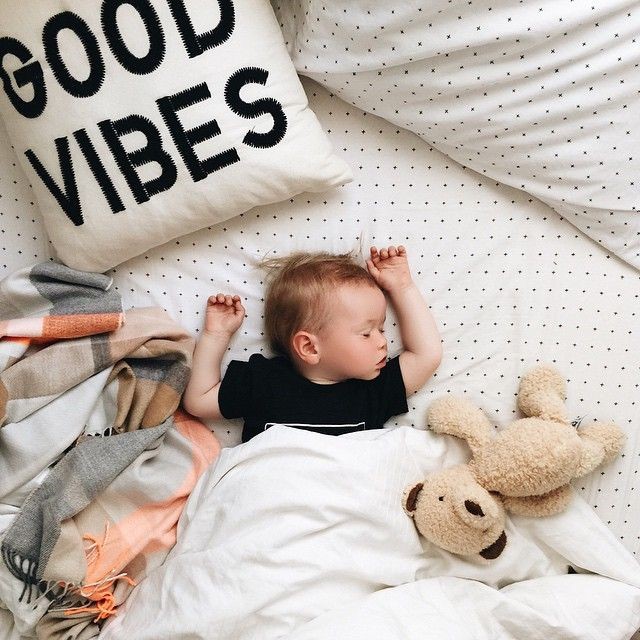
From 4 to 12 months, babies need about 12 to 16 hours a day, including naps. Many sleep a longer stretch at night with 2 to 3 daytime naps. One or two sleep interruption during the night is completely normal for your child at this age.
It’s important to keep in mind that your baby can make noises or even cry during light sleep. If they wake briefly, many babies fall back asleep within a few minutes on their own.
Source: Pinterest, Joy and Happiness
However, if your baby wakes up and cries continuously, respond, because they may be hungry, wet, cold or sick. Call your pediatrician if your baby seems unwell.
In order not to disrupt your child’s sleep, you should keep nighttime awakenings for changing and feeding as silent as possible. Always keep in mind that nighttime is for sleeping, so avoid talking with your baby and turning on the lights if you don’t have to.
Establish a bedtime routine for your baby. Soothing activities such as bathing, reading, and singing can become a part of your pre-bed routine. If you do this in the same order and consistently, your baby will associate the soothing activities with sleeping and fall asleep faster.
For every sleep, follow safe sleep rules: the safest sleep position is on the back, on a firm, flat surface with no pillows, blankets, bumpers or toys, until your baby turns one.
When older babies wake at night, keep things calm and boring: low lights, little talking and no play. Between 6 and 12 months, separation anxiety is a normal part of development.
Many families find that helping a baby learn to fall asleep on their own leads to fewer night wakings.
Toddlers (1 to 3 Years)
Toddlers (1 to 2 years) need about 11 to 14 hours of sleep a day, including naps. Separation anxiety is the biggest problem kids have at this age. As your child grows older, you’ll hear crazier and crazier reasons for not going to bed.
In order to overcome these issues, it’s of utmost importance to set regular bedtimes and strictly stick to them. Don’t keep your kids up in order to make them sleepier. Also, don’t force them to nap if they don’t want to.
Establish a bedtime routine that will help your kids relax, unwind and prepare for sleep. The routine should be 5 to 30 minutes long. It should include calming activities such as reading a story, listening to calm music or bathing.
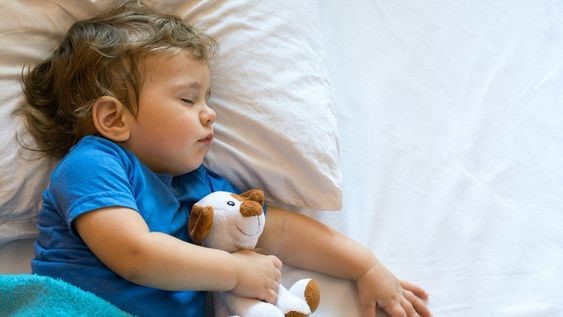
The ritual must be the same every night. The pre-bed ritual shouldn’t be complicated or too long. Since toddlers have a need to control everything, allow them to pick their pajamas, stuffed animal they will take to bed and stories you’ll read to them.
Source: Pinterest, mother.ly
Keep in mind that active dreaming begins at this age. Nightmares are pretty scary to them because they can’t differentiate imagination from reality. To avoid nightmares, carefully select what TV programs and cartoons your child watches.
If your kid is awakened by a nightmare, comfort them and show them that you can protect them. Spraying monster repellent spray (clean water in an interesting bottle) around the room usually does the trick.
Preschoolers
Preschoolers (3 to 5 years) need about 10 to 13 hours of sleep a day, including naps. If they don’t get enough rest at night, they may need a longer daytime nap.
Provide some quiet time in the afternoon for your child if he needs to rest or nap.
School-Age Kids
School-age kids (6 to 12 years) need about 9 to 12 hours of sleep every night. Bedtime issues at this age are usually caused by external factors such as homework, sport, computer, TV, exhausting after-school activities, and incessant and frantic family schedules.
If your child has troubles falling asleep at night, make sure whether or not the mentioned factors are causing the problem.
To help your kid have a better night’s sleep, create a consistent bedtime routine and a sleep-supportive bedroom. Ensure your kid sleeps on a quality mattress.
The best mattresses for kids are the ones that provide good support and reduce rolling, fidgeting and discomfort, allowing your child to sleep more soundly. Don't fill up your kid’s bed with toys because you have to teach him a bed is a place to sleep, and not a place to play.
Teens
Teens (13 to 17 years) need about 8 to 10 hours of sleep per night, but many sleep less due to early school start times and tight schedules packed with different activities. During puberty, a teen’s body clock shifts later.
This change manifests in their need to stay up late and wake up later in the morning. To prevent sleep deprivation, try to make them go to bed at a reasonable hour, at least during school days.
Never forget that you are a role model for your child, so make sure you set a good example by showing them that sleep is a priority. Staying up all night to work or watch movies isn’t exactly sending the right message.
However, by going to bed at a reasonable hour, you’re showing them sleep is a vital part of healthy lifestyle, just as eating right and exercising regularly.
Andrew Levacy runs Memory Foam Talk, a site dedicated to unbiased Mattress reviews. His mission is to help people facilitate the long and often painful process of selecting a new mattress.
Sources
- About Sleep, CDC
- Ways to Reduce Baby's Risk, Safe to Sleep, NICHD