Choosing The Best Antiperspirant For Hyperhidrosis

Experiencing hyperhidrosis is a horrible feeling. Excess sweat comes at the most inconvenient times, day and night. Regular deodorant, no matter what form it comes in, just doesn’t cut it, which is why you need the best antiperspirant for hyperhidrosis.
The right ingredients can make a real difference to the condition, which affects roughly 3% of people. Cleveland Clinic gives the same estimate for U.S. adults ages 20 to 60.
Don’t know where to start looking?
We’ve reviewed a popular clinical-strength option and explain when to see a doctor instead.
Criteria
Hyperhidrosis is a condition that causes excess sweating. It isn’t just limited to your underarms.
You may experience it on the palms of your hands, the bottom of your feet, in the groin area and on the face, but the underarms are often the most noticeable and can harbor bacteria, which is where the smell comes from, therefore the most embarrassing!
Normally you would think you could turn to deodorants to help, but with hyperhidrosis, regular antiperspirants hardly seem to help. Sometimes even the maximum strength ones don’t seem to make a difference.
For excess sweating, look for an aluminum-based antiperspirant, such as one with aluminum chloride. Cleveland Clinic notes the best antiperspirants for hyperhidrosis are aluminum-based, and doctors can prescribe stronger versions.
If over-the-counter products don't help, a dermatologist can offer other treatments, including iontophoresis, Botox injections, medicated wipes or tablets.
See a doctor if sweating has lasted 6 months or more, affects your daily life, happens at night, or started with a new medicine. Get care right away if heavy sweating comes with chest pain, nausea or dizziness.
Sweat Block Clinical Strength Antiperspirant
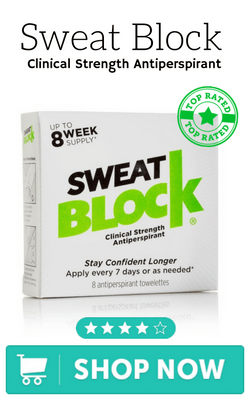
Sweat Block Clinical Strength Antiperspirant is a strong antiperspirant marketed for people with heavy sweating.
This comes as a small towelette rather than a roll-on or solid. It’s easy to apply. Just dab on your underarms before bed (don't rub) and put on clothes after it dries to prevent staining.
Applying antiperspirant at night, on dry skin, gives it time to work while you're sweating less. The maker says one application can last up to seven days; results vary.
You can add a regular deodorant if you want a fragrance.
The maker lists 14% aluminum chloride as the active ingredient. Aluminum chloride can sting, itch or irritate the skin, so don't apply it to broken, irritated or freshly shaved skin. Stop using it if you get a rash.
Some people with heavy sweating say it has helped them a lot.
You don’t have to feel restricted to dark colors and loads of uncomfortable layers to be able to hide those embarrassing stains. Just add it to your bedtime routine so you make sure to get the most out of the product.
Pros & Cons
Antiperspirants, especially high strength ones, can cause some damage to your clothes. Try to make sure you’re dry before putting on clothing to reduce the risk. SweatBlock recommend waiting at least five minutes.
SweatBlock may not be able to work as well on underarms that have a lot of hair. You may need to trim the hair to get the maximum effect.
Strong antiperspirants can irritate skin, so don't use this on irritated skin.
Reviewers have suggested the smell isn't ideal. SweatBlock have said you can also use regular deodorant or body spray for a more pleasant smell.
You can't apply it in the morning and expect it to work right away. Apply it the night before to be prepared for the day ahead.
It costs more than a normal deodorant, but you don't apply it every day.
Conclusion
Hyperhidrosis may seem like a condition that keeps you from doing the things you love, but it can usually be controlled.
A clinical-strength antiperspirant like SweatBlock is a reasonable first step. If it doesn't help within a few weeks, or the sweating is new, all over your body or happens at night, see a doctor. Heavy sweating can be a side effect of a medicine or a sign of another condition, and prescription treatments work well.
Sources
- Hyperhidrosis: Types, Causes, Symptoms & Treatment, Cleveland Clinic
- Excessive sweating (hyperhidrosis), NHS