Best Seat Cushions For Sciatica: Our Reviews Guide

Contents
Many adults will deal with sciatica at some point, because it is very common. A good cushion can make sitting more comfortable while you recover.
There are many seat cushions for sciatica on the market. They won’t fix the nerve problem itself, but they can take pressure off your lower back and tailbone.
The struggle is finding the right seat cushion for you, but that’s where I come in!
I’ve done the research for you, now let me reveal the best seat cushions for back pain.
What Is Sciatica?
If you’ve suffered from sciatica, you know that it’s marked by a pain that travels down the leg, coming from your lower back.
Often, the pain only occurs on one side of the body and weakness and numbness may also be present.
A herniated (slipped) disk is one of the most common causes.
Other causes include spinal stenosis, piriformis syndrome, pelvic injury, tumors and spondylolisthesis. Sciatica is also common during pregnancy.
During an exam, a doctor may have you lie on your back and lift your leg straight up. Pain with this movement can point to sciatica, but only a clinician can diagnose the cause.
Many cases improve within four to six weeks. In the meantime, a supportive cushion may make sitting easier.
Get medical care right away if you have loss of bladder or bowel control, new leg weakness, numbness in the groin or buttocks, or pain after a fall or injury.
5 Best Seat Cushions For Sciatica
Aylio Coccyx Seat Cushion
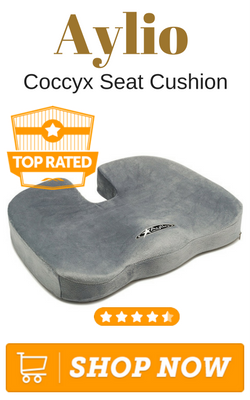
This cut-out design is perfect for relieving pressure on your spine.
No matter what your weight, this pillow can take the load.
You’ll hover over the ‘U’ on the rear of the cushion.
It supports your buttocks, hips and thighs.
Made from a contoured foam, this pillow is light enough to travel anywhere you need relief.
This pad reduces pressure in the tailbone area, which can make sitting with sciatica more comfortable.
To keep your cushion clean, simply zip off the velvet cover and wash gently.
PharMeDoc Orthopedic Coccyx Seat Cushion
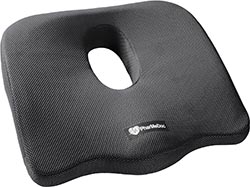
Perfect for taking anywhere you need support, this cushion features a rear cutout design to reduce the pressure in your lower back and tailbone, and eliminate stiffness.
The maker says the seat holds its shape with daily use.
The zipper removable pillow cover can be machine-washed, is hypoallergenic and contains no phthalates, latex, lead and is even BPA-free.
Comfy Cure Coccyx Memory Foam Seat Cushion
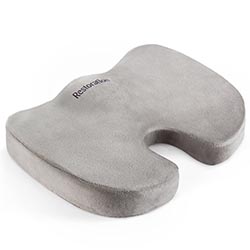
Looking for the benefits of memory foam?
This memory foam cushion is a popular pick among seat cushions for sciatica.
It reduces pressure on the tailbone and encourages the healthy posture you need to feel better.
The maker says it resists flattening, though all foam compresses over time.
The non-slip rubber bottom grip will keep it in place and the machine washable zippered cover will stay clean and hygienic and easy to clean.
This is a great option when you’re traveling, driving to work or sitting in front of your computer.
Wheelchair users should ask their care team before switching cushions, since pressure sore prevention needs a properly fitted cushion.
Coccyx Cushion Pillow For Back Support By GetComfort Goods
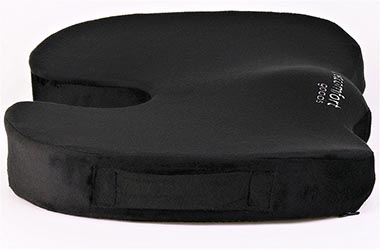
This cushion is designed to keep your tailbone off the seat while supporting the rest of your weight.
It comes with a grip handle so you can take it anywhere and is ideal for traveling in the car.
This seat is made of 100% premium memory foam cushion and comes with a non-slip bottom so it stays in place.
There are no additions to this pillow and the cover is machine washable.
Coccyx Cushion Pillow For Chairs By MedX
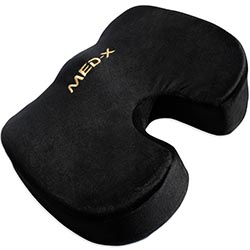
This coccyx cushion eases excess pressure on the tailbone.
It spreads your weight more evenly, which can make sitting with sciatica more comfortable.
It can be considered a great choice for the best seat cushion for back pain.
Conclusion
You see now that there’s a nice variety of choices for best seat cushions for sciatica that can make sitting more comfortable.
Use a quality cushion to relieve pressure while you sit, and get up and move regularly. If your pain lasts more than four weeks or keeps getting worse, see a doctor or physical therapist for diagnosis and treatment.