Banish Sensitivity: Mouthwash For Sensitive Teeth
Contents
We’ve all seen the adverts featuring people biting into ice creams and revealing the miracle product that allows them to do so without wincing.
If you suffer from sensitive teeth, you’ll understand the pain that comes with consuming extra-hot or extra-cold food and drink. You’ll also be sceptical about how a product can really help you overcome it.
Well, here’s some good news. I’ve found a mouthwash that can help you manage sensitive teeth as part of a good daily routine. With this, you can bite into a cone without crying (who really bites ice cream anyway?!)
Colgate have produced the best mouthwash for sensitive teeth, so read on to find out more…
What Causes Tooth Sensitivity?
Tooth sensitivity is a bit of a nightmare, let’s be honest. If your teeth are extra sensitive to hot or cold foods and drink, it’s often because the softer dentin under your enamel is exposed, through worn enamel or receding gums.
Enamel is the protective coating on our teeth, and prevents out teeth from being exposed to extremes. Our tooth enamel can be damaged or worn down by a poor diet and dental routine.
If your teeth are starting to decay, the nerves inside your teeth are going to be much more affected by anything hot or cold.
The same is true of any teeth with cavities – the exposed roots or nerves in your teeth leave them open to the elements. Tooth sensitivity could be a sign that your teeth are developing cavities, so it might be time for a trip to your dentist.
Equally, if you have exiting fillings, any increased tooth sensitivity might be a warning sign that something isn’t quite right. Your fillings may have shifted, so get them checked out as soon as you can.
Receding gums are an issue on their own, but will also expose more of your tooth. Again, the more exposure of an uncovered tooth, the more sensitive you’ll be to hot or cold foods and drinks!
If you notice any changes in the appearance or feel of your teeth, it could be a sign that things are shifting in your mouth. You should see a dentist if this happens, in order to prevent any further issues.
Best ways to prevent tooth sensitivity
Daily Brushing
Goes without saying, but keeping your teeth clean and healthy will make a huge difference. Enamel damage is often the result of an inconsistent dental hygiene routine.
By brushing at least twice a day, you’re keeping harmful bacteria and plaque build-up at bay. No rhyme intended! The less damage your teeth experience, the less likely they are to become super sensitive.
Stay Away from Acidic Foods
Acidic foods can cause damage to the enamel of your teeth. The acid actually erodes your tooth enamel, leaving your teeth vulnerable and sensitive. I’d suggest avoiding overly-acidic food, and brushing after eating them if possible.
The acidic content will damage enamel and may also lead to tooth decay, which is never going to be a good thing.
Flossing
Flossing is a great way to keep your mouth clean, and a clean mouth is a healthy mouth. By clearing your mouth of any bacteria or leftover food (I know, kinda gross!), you’re on the way to healthy teeth and gums.
The more you look after your teeth, the stronger the enamel will be and the less likely you are to experience tooth sensitivity. We already know that gum issues can worsen tooth sensitivity, so look after them by flossing!
How Does Mouthwash Assist Sensitive Teeth?
Mouthwash is another great way of helping combat tooth sensitivity. Mouthwash works in a variety of ways to look after sensitive teeth, as well as preventing the issue from worsening.
Sensitivity mouthwashes don’t numb your teeth. Like desensitizing toothpaste, many contain compounds that help block sensation from traveling from the tooth surface to the nerve.
Rinses with fluoride also help strengthen enamel. Both effects build up over time, so stick at it to really benefit.
As with most things to do with improving our health, results don’t come overnight! Work on improving your routine and start getting into some good habits.
Exposed dentin has tiny channels that lead toward the nerve. Some sensitivity products work by blocking those channels, which takes several uses.
In general, mouthwash will clean your mouth and prevent further issues with plaque build-up and harmful bacteria. Ultimately, combining mouthwash with your existing dental routine can only be a good thing…
What To Look For
So, what should you be looking for in a mouthwash when you have sensitive teeth?
Going shopping for any kind of health or beauty product can quickly turn into an absolute nightmare. Rows and rows of almost identical products all offering different things in tempting packaging.
It gets very stressful and you often end up buying what you always buy, even if it doesn’t really work, just out of ease.
I’ve compiled a few tips into a mini buying guide for you, so, hopefully, your next trip to the store won’t be as draining…
Buying Guide
Firstly, give up the booze!
In your mouthwash, at least, let’s be realistic. Many mouthwashes contain alcohol, which is common. If your teeth or gums are sensitive, though, an alcohol-free rinse is usually more comfortable.
Alcohol-free rinses are also popular with people who wear braces. Keep in mind that the ADA does not recommend mouthwash for children under 6.
Ideally, find a mouthwash that is also anti-bacterial. You may as well have a total clean while you’re at it! Fluoride is a common ingredient in dental products and can help prevent tooth decay, so keep an eye out for it.
These kind of mouthwashes are also great for any bad breath issues you may have going on. They’ll leave you feeling totally clean and fresh!
Probably pretty self-explanatory, but opt for products specifically designed for sensitive teeth and gums.
These usually contain a desensitizing ingredient, and many add fluoride.
There are various levels of teeth and gum sensitivity, and if yours is an ongoing or worsening condition, it’ll be worth chatting to your dental hygienist and seeing what they recommend for you personally.
Colgate Sensitive Relief Mouthwash
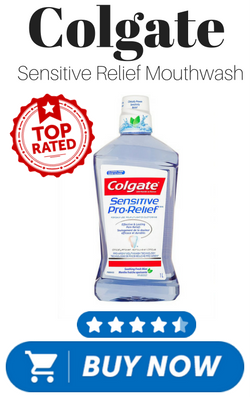
Everyone has heard of Colgate for a reason, and this mouthwash just goes further in proving why they’re so great.
This mouthwash is designed specially to help with sensitive teeth and gums.
Colgate says it targets sensitivity and helps strengthen enamel. Check the active ingredients on the label before you buy.
This mouthwash for sensitive teeth is alcohol-free, so it is gentle on sore gums.
Pros
The good aspects of this mouthwash? It is made specifically for sensitivity, and it slots easily into a routine with a desensitizing toothpaste.
I love that this is alcohol-free, too, as it just feels a lot more gentle on sensitive teeth and sore gums.
It still gives a great feeling once you’ve used it – smooth, shiny, clean teeth that you’re not afraid to sink into something delicious.
Cons
The downside? It costs more than a basic mouthwash, and like any sensitivity product it needs regular use before you notice a difference.
It also doesn’t replace a dental visit. New or worsening sensitivity can be a sign of a cavity, a cracked tooth or gum problems.
Conclusion
A mouthwash for sensitive teeth can be one helpful part of your routine, alongside a desensitizing toothpaste, a soft brush and fewer acidic foods.
If pain is sharp, lingers after the hot or cold is gone, or centers on one tooth, see your dentist. Then go forth and eat some gelato…
Sources
- Sensitive Teeth, MouthHealthy, American Dental Association
- Mouthwash (Mouthrinse), MouthHealthy, American Dental Association