Probiotics For Horses: What They Can and Can't Do

In the past, we’ve talked about probiotics for people. Probiotics are also sold for horses, and many owners use them.
Horses are prone to colic and other gut problems, so it's natural to wonder whether probiotics can help. The honest answer: the evidence is weak so far. A review in the Journal of Veterinary Internal Medicine found little proof that probiotics prevent or treat disease in horses. As with human probiotics, effects depend on the specific strain and dose.
Probios, a maker of probiotics for many different animals, has a probiotic range specifically for horses. Below we look at what it offers and what the research does and doesn't show.
Criteria
The microbial balance in a horse's hindgut is delicate. Sudden diet changes, such as switching from pasture to more hay or grain, can upset it and lead to digestive issues.
Colic is common and can be life-threatening. There's no good evidence that probiotics prevent it; gradual feed changes, constant access to water and plenty of forage matter more. If you suspect colic, call your veterinarian right away.
Stress
Stress may also affect the gut. Horses can easily be stressed, especially during travel, at shows and during other changes in routine.
Some owners give probiotics such as Probios ahead of these events. That's a reasonable thing to discuss with your vet, but research hasn't shown clear benefits. Diarrhea, poor appetite or signs of pain need a veterinary exam, not a supplement.
Absorbing Nutrients
Some studies have looked at digestion benefits, but results vary by product, strain and dose.
In horses, most fiber is fermented by microbes in the hindgut (cecum and colon). A balanced, forage-based diet is the foundation of good nutrition; a probiotic is an optional extra.
Older Horses
Older horses that struggle to hold weight need a vet check, since dental problems and other conditions are common causes. There's no good evidence that probiotics improve joint health in horses.
Allergies
Claims that probiotics prevent allergies or hives in horses aren't supported by research. Talk with your vet if your horse has hives or other allergy signs.
Product Overview
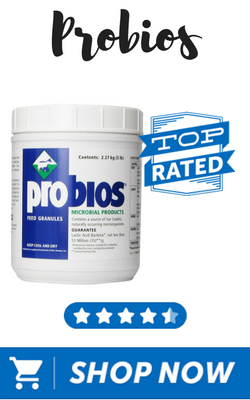
Probios makes probiotic supplements for different animals, including horses. The brand says its products carry the NASC (National Animal Supplement Council) Quality Seal.
Probios Feed Granule for Horses is a popular item of choice for those horse lovers who want to ensure their horses are happy and healthy.
It comes in a tub and contains live microorganisms. Check the current label for the guaranteed CFU (colony forming units) count.
The label lists Lactobacillus strains such as L. acidophilus and L. casei.
The handy guide on the back gives all the necessary information on how much should be given to your horse, as dosages differ between foals and adults.
Pros And Cons
Probios is easy to feed and widely available. However, research hasn't proven that horse probiotics reduce colic, improve immunity or boost nutrient absorption.
There’s also no guesswork in feeding your horses Probios feed granule. The tub comes with a handy scoop. Don't share it with other animals unless the label covers them and your vet agrees.
If you and your vet decide to try it, any benefits of probiotics won't be immediate, so owners usually start a few days before a planned change or stressful event.
Some horses take a paste more easily than granules. Be cautious with foals: the JVIM review found conflicting results, including one product linked to more diarrhea in foals.
Quality is another concern. In one analysis cited by the review, only 2 of 13 equine products contained the labeled organism at the labeled amount.
Conclusion
Veterinarians and owners have been giving probiotics to horses for years, but the research hasn't caught up with the marketing.
If you'd like to try Probios, talk with your veterinarian first, follow the label dose, and keep the basics in place: good forage, gradual feed changes, clean water and regular dental care.
Sources
- Probiotic Use in Horses: What is the Evidence for Their Clinical Efficacy?, Journal of Veterinary Internal Medicine (Schoster, Weese, Guardabassi, 2014)
- Probiotics: Usefulness and Safety, NCCIH (NIH)