
The Best Gingivitis Mouthwash: Complete Reviews Guide
Contents
Do you suffer from tender gums?
Do you find your gums bleed when you brush your teeth?
If so, you may have gingivitis, the early, mild form of gum disease. It’s common, and it can often be reversed.
It’s most commonly caused by the build-up of plaque and bacteria and characterized by bleeding from swollen gums.
The main fix is better daily care. According to the National Institute of Dental and Craniofacial Research, early gum disease can often be reversed by daily brushing and flossing.
A therapeutic mouthwash can be a helpful add-on, but it doesn’t replace brushing, flossing or dental cleanings.
A problem you may encounter is that there are so many mouthwashes available on the market that choosing the most appropriate one may be difficult.
I’ve taken the guesswork out of the equation. This article will help you choose a mouthwash that supports your brushing and flossing.
What Makes A Good Mouthwash For Gingivitis
The best mouthwash for gingivitis is a therapeutic rinse with active ingredients shown to reduce plaque and gingivitis, not just freshen breath.
By protecting your gums and teeth against plaque and tartar, gingivitis mouthwash can help prevent and reduce the early stages of gingivitis. In order for a mouthwash to work, you need to swish it around your mouth for at least 30 seconds.
A good mouthwash should have a pleasant taste to help you do this. By leaving an agreeable taste in your mouth, you’re more likely to use the mouthwash regularly.
Alcohol is a key ingredient in many mouthwashes that are designed to combat gingivitis. However, using a mouthwash that contains alcohol may not be suitable for everyone.
Keep your eyes open for mouthwashes that are alcohol-free as they’re less likely to cause a stinging sensation and will be more pleasant to use.
Look for the ADA Seal of Acceptance. The American Dental Association gives it only after a company provides scientific evidence of safety and effectiveness.
Children under 6 shouldn’t use mouthwash unless a dentist says so, because they may swallow it.
If you have any doubts about the best type of mouthwash for your needs, always seek professional advice from your dentist or oral hygienist.
Listerine Antiseptic Mouthwash
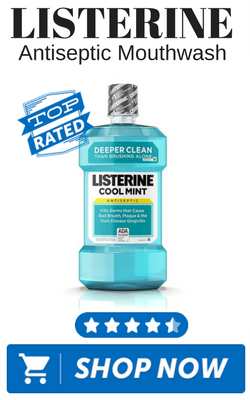
Listerine is the original antiseptic mouthwash. You can hardly argue with a brand that has been around for over 100 years.
This Antiseptic Mouthwash will kill germs that cause bad breath, plaque and gingivitis. The maker says the effect lasts up to 24 hours when used as directed.
The germs are killed using a unique formula of essential oils including eucalyptol, menthol, methyl salicylate, and thymol. These attack and kill germs immediately upon contact.
Essential-oil rinses like this one are a well-studied option for reducing plaque and gingivitis. Check the label for the ADA Seal.
The original formula contains alcohol, so it can sting. If that bothers you, Listerine also sells alcohol-free versions.
It’s simple to use. Just rinse your mouth with the mouthwash twice daily (preferably after brushing) for optimum and long-lasting results.
The cool mint flavor is so refreshing that you’ll look forward to using it as part of your oral hygiene routine.
Pros & Cons
Listerine is probably the most well known brand when it comes to mouthwashes, and they have longevity to back up their claims of quality.
The blend of essential oils in this Antiseptic Mouthwash helps reduce germs and plaque build-up between brushings.
Flavored with cool mint, it’s strong enough to leave your breath feeling fresh all day long, but not uncomfortably overpowering.
Use the mouthwash as directed for best results. This means rinsing with it twice each day which can add time to some consumers’ already busy hygiene routine.
However, even when used twice daily the bottle will last you quite a while.
Whilst it’s an effective mouthwash, it doesn’t replace the need for brushing and regular check-ups with your dentist or oral hygienist.
Store-brand antiseptic rinses with the same active ingredients are also available if you want a cheaper alternative.
In Conclusion
Bleeding and swollen gums are unpleasant and unsightly. They can be painful and lead to more serious oral health issues if left untreated.
Gingivitis mouthwash is designed to kill the germs that cause gingivitis and prevent further cases.
Gingivitis is unpleasant, but can usually be reversed and prevented with good daily care and regular dental cleanings.
Listerine Antiseptic Mouthwash is a simple add-on to that routine.
If your gums keep bleeding, swelling or pulling away from your teeth, see your dentist. Untreated gingivitis can progress to periodontitis, which needs professional treatment.
Get on with your busy schedule with a smile!
Sources
- Periodontal (Gum) Disease, National Institute of Dental and Craniofacial Research
- Mouthrinse (Mouthwash), American Dental Association